
The wrong formula or process can waste materials and ruin production. Many companies also fail because they do not understand how EVA foaming works.
**EVA foaming uses EVA resin, foaming agents, and additives combined in precise formulas and processed through four key stages to achieve the desired density, elasticity, and durability.**

If someone asked me the secret of producing quality EVA foam, I would say it comes from both the formula and the process. I have seen factories use the right materials but wrong temperatures, ending with brittle or uneven foam. I have also seen the cost rise because they used too many unnecessary additives. If you understand both the materials and the four main stages of production, you can keep foam quality consistent while reducing waste.
## What are the main raw materials for EVA foaming?
Cheap or poorly chosen materials can lead to cracked, stiff, or weak foam, even if the process is correct.
**The main EVA foaming raw materials are [EVA resin](https://thermtest.com/benefits-ethylene-vinyl-acetate)[^1], foaming agent, crosslinking agent, and functional additives, each with a specific role in density, hardness, and stability.**

I once worked with a supplier who used a lower-grade EVA resin to lower costs. The result was foam that yellowed and cracked within months. EVA resin is the primary polymer. The foaming agent decomposes under heat to release gas, which forms cells in the material. The crosslinking agent bonds molecules for strength. Additives like pigments, antioxidants, or flame retardants improve appearance and performance. Here’s how I usually evaluate them:
| Material | Function | Notes on Selection |
|——————–|——————————————|——————————|
| EVA Resin | Base polymer, affects softness and elasticity | Choose high-purity resin |
| Foaming Agent | Generates gas for cell structure | Uniform decomposition temp |
| Crosslinking Agent | Strengthens structure by molecular bonds | Correct ratio critical |
| Additives | Modify color, UV resistance, flame retardancy | Match to end-use needs |
By knowing the role of each material, we can decide what to adjust to improve durability or feel without overspending.
## What is the first key process in EVA foaming?
Skipping or rushing the first step will ruin the rest of the process no matter how good the later work is.
**The first key process in EVA foaming is mixing, which ensures all materials are evenly distributed for consistent cell structure and hardness.**

When I first learned EVA production, I underestimated mixing. I thought a few minutes in a mixer was enough. Later I realized uneven mixing is the root of most defects: spots, weak points, or uneven hardness. Mixing involves measuring raw materials by weight, putting them in a mixer, and blending until pigments, resins, and [foaming agents](https://en.wikipedia.org/wiki/Foaming_agent)[^2] are dispersed. Some factories preheat materials to help dispersal. In my view, the time here is worth it because correcting uneven foam later costs far more. Consistent mixing also ensures reaction timing will be predictable in the heating stage.
## What is the second process in EVA foaming?
If the material is shaped without care before foaming, gas release and expansion will be unstable.
**The second process is preforming, where the mixed compounds are pressed or shaped into sheets before actual foaming.**

I remember visiting a plant that skipped proper preforming to save time. Their foam came out warped. Preforming aligns the mixture into a uniform thickness so that heat and [foaming agents](https://en.wikipedia.org/wiki/Foaming_agent)[^2] act evenly. This step usually uses compression molding to remove air and partially crosslink the material without activating the foaming agent. For EVA storage cases, I find controlling thickness here makes trimming easier and reduces product waste. If your [preforming](https://patents.google.com/patent/US6346207B1/en)[^3] mold is old or damaged, you will likely see inconsistent density in the final foam.
## What is the third process in EVA foaming?
Bad control of heat and timing here can cause collapsed cells or overly large bubbles.
**The third process is foaming, where heat triggers the foaming agent to expand and create the cell structure inside EVA.**

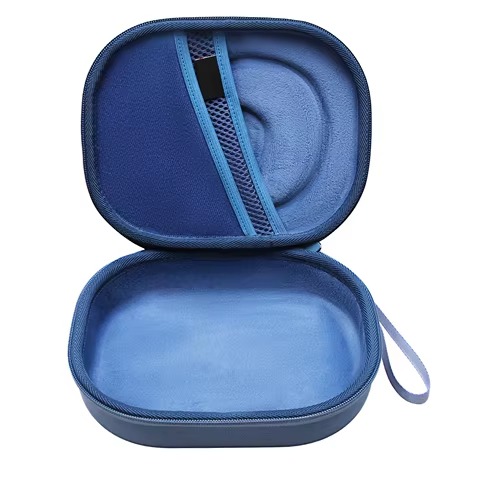
Foaming is the stage where I feel the most pressure as a designer. You put the prepared preform into a high-temperature mold. The foaming agent decomposes, releasing gas. At the same time, crosslinking agent bonds happen to give shape strength. The balance here is delicate: too much heat and cells collapse, too little and the foam is dense and heavy. I keep detailed logs of temperature and time for each batch because even a few degrees difference changes results. For products like protective storage cases, I prefer a fine, even cell structure for balance between strength and cushioning.
## What is the fourth process in EVA foaming?
If you stop after foaming, the material will be unstable and may deform during later use.
**The fourth process is post-treatment, which cools, trims, and sometimes compresses foam to stabilize dimensions and performance.**

Post-treatment might sound simple, but I have seen entire runs ruined here. After foaming, the material is still warm and flexible. It must be cooled steadily to avoid shrinkage or warping. Some factories use air cooling, others water baths. Trimming removes flashing or excess edges. Compression or surface treatments can also adjust hardness or smoothness. Without proper [post-treatment](https://www.sciencedirect.com/science/article/abs/pii/S0143749604000612)[^4], customers may find their foam parts do not fit intended products. In storage case production, I have always treated this step as critical because buyers often judge product quality by visual and surface finish.
## Conclusion
Good EVA foam comes from both the right materials and the careful control of each of the four processes.
—
[^1]: Understanding EVA resin is crucial for producing quality foam, as it directly affects softness and elasticity.
[^2]: Explore how foaming agents generate gas for cell structure, essential for creating durable EVA foam.
[^3]: Understanding preforming helps ensure uniform thickness and reduces waste in foam production.
[^4]: Post-treatment stabilizes foam dimensions; learn why it’s essential for product quality.